Winter break starts soon. Your young soccer player will have two weeks without structured training, and you're wondering how to keep them active without screens taking over.
Here's the good news: keeping soccer skills sharp over the holidays doesn't require a field, cones, or hour-long sessions. Short, playful activities at home make a real difference for kids ages 4–12. At We Make Footballers, we focus on building confidence and love for the game first. Your holiday practice should feel the same way: fun first.
Whether you're looking for indoor soccer drills for winter, at-home ball control exercises, or simple skills practice that doesn't need a field, these activities work for youth players from PreK through middle school.
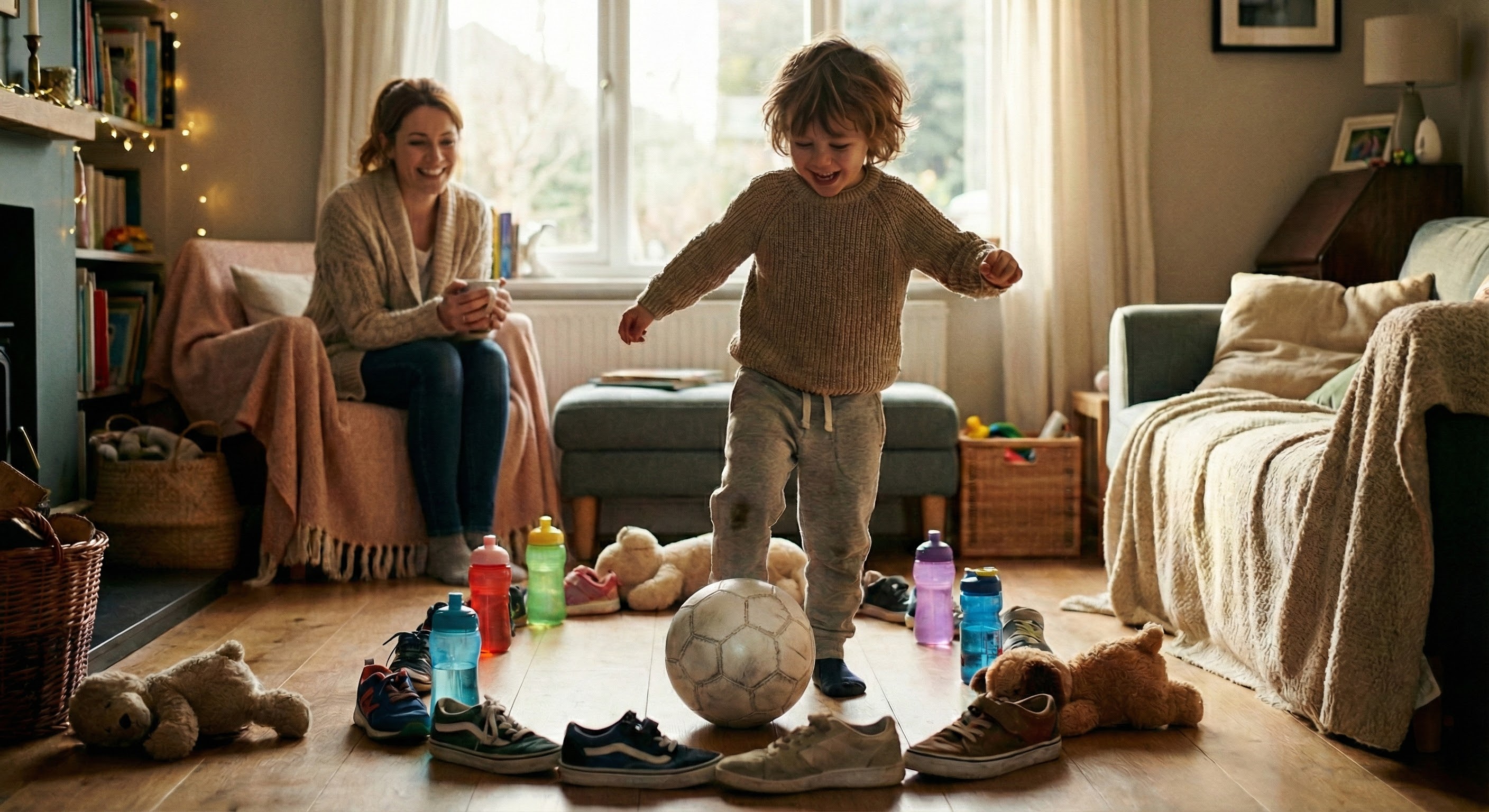
Dribbling improves fast with repetition, and this drill makes it feel like a game.
Grab a soccer ball and set up a zigzag course using shoes, water bottles, stuffed animals, or rolled-up socks. Your child dribbles through the course using small, controlled touches.
Make it competitive:
Your child develops close control, balance, and coordination while having fun. This one works indoors or out.
First touch separates confident players from hesitant ones. You can practice it safely in any room with 6-8 feet of clear space.
Sit or stand facing your child and gently roll the ball toward them. Their job: stop it cleanly with the sole or inside of the foot, then roll it back.
Progress as they improve:
They'll develop softer touches and better awareness with zero pressure.

Passing doesn't need teammates. It needs accuracy.
Set up laundry baskets, buckets, or tape markers at different distances. Your child passes the ball into each target using the inside of the foot.
Turn it into a game:
Young kids can let the ball roll gently. Challenge older players to pass with one touch.
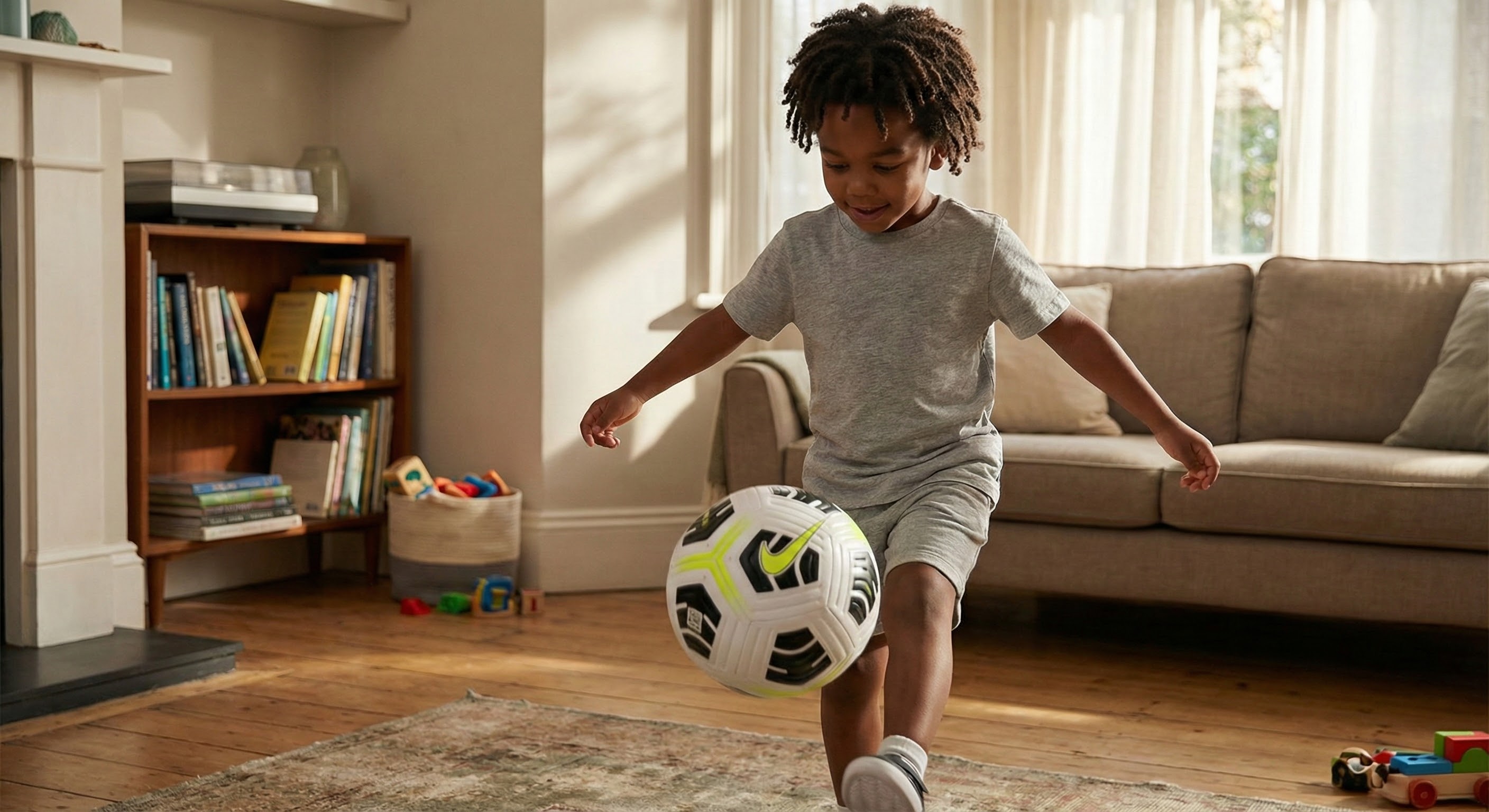
Keep-ups aren't just about juggling. They build touch, patience, and coordination.
Try these progressions:
For younger players, start by catching the ball after one touch. Confidence grows when success feels achievable.
Sometimes the best soccer practice is imagination-led play.
Create a mini match scenario. Your child is the player. You're the commentator. Call out situations:
This builds decision-making, creativity, and confidence while keeping things light and joyful.
For this age group, 10-20 minutes is plenty. Short, regular sessions beat long ones every time. Two or three mini sessions per week during break maintains progress without burnout.
Don't aim for perfection. Aim for movement, smiles, and staying connected to the game.
How often should my child practice during winter break?
2-3 times per week for 10-20 minutes keeps skills fresh. More than that risks turning fun into a chore.
Can these drills work indoors?
Activities 1-4 work in any room with clear floor space. Use a soft indoor soccer ball to protect walls and furniture.
What if my child gets frustrated?
Keep it playful. If they're not having fun, switch activities or take a break. The goal is staying connected to the game, not mastering every drill.
Do I need soccer experience to help?
No. These activities focus on repetition and encouragement. Your enthusiasm matters more than your technique.
Pick one activity from this list. Set a 10-minute timer. That's your holiday practice session.
Tomorrow, try a different one. By the end of break, your child will have touched the ball 15-20 times without it feeling like work. These fundamentals mirror what we teach in our weekly training sessions, helping your child return to the field feeling sharper and more excited to play.
Holiday soccer practice should feel like play, not homework. If your child is laughing, moving, and asking to go again, you're doing it right.

Soccer coaching for children aged 4-12 years old in the US.


We Make Footballers USA LLC