One of the biggest problems we see in U.S. football development has nothing to do with facilities, funding, or coaching quality.
It’s passion.
At We Make Footballers, we’ve worked across multiple countries and football cultures, and one difference stands out clearly: football is not yet ingrained into American life in the way it is in countries like Argentina, Brazil, England, Holland, Germany, Spain, or Portugal.
In those countries, football isn’t just something children do for an hour after school.
It’s something families live.
Here’s a simple test of football culture.
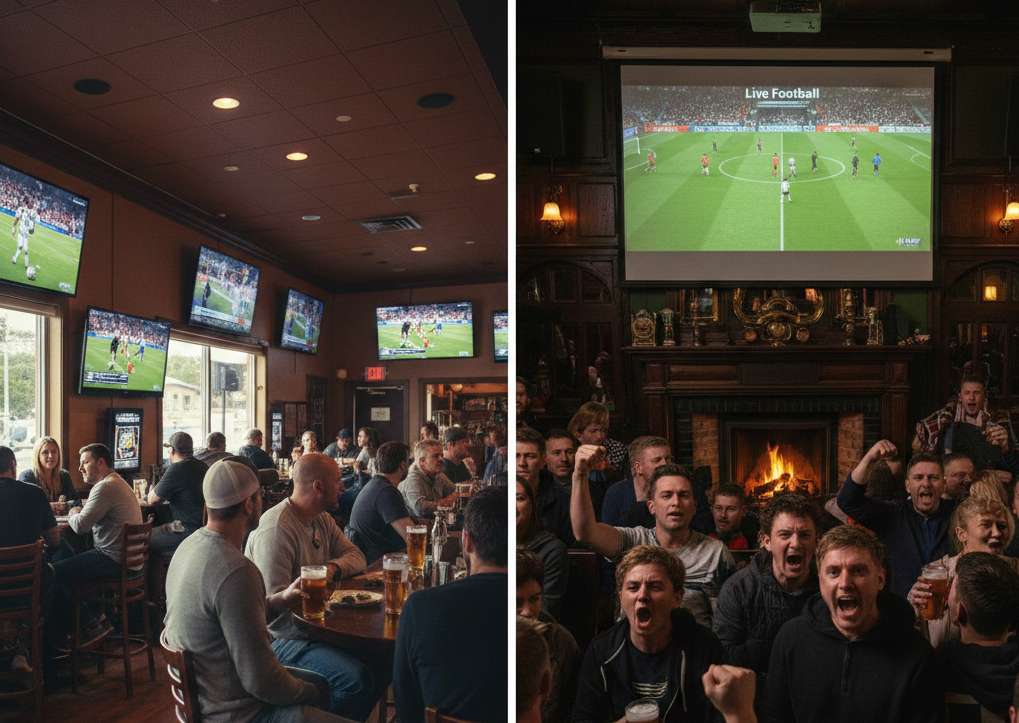
You should be able to walk into a bar in Miami — say Moxie’s in Brickell — and an important Premier League game should already be on the TV. A match like Arsenal vs Bournemouth shouldn’t require a request. It shouldn’t involve channel surfing. It should simply be playing.
Right now, basketball is always on.
NFL is always on.
That’s because those sports are deeply embedded in American culture.
Football isn’t there yet — and this isn’t just one bar. It’s happening across the country.
Football culture starts at home.
If parents aren’t emotionally invested in the game, their children rarely become truly obsessed — and obsession is a non-negotiable ingredient for elite players.
The best footballers don’t just train.
They watch football.
They talk about football.
They argue about football.
They dream about football.
When parents feel the highs and lows of the game — the late goals, the heartbreak, the tension — that passion transfers directly to their children.
Without that emotional connection, development stalls.
You don’t even have to support a team to feel football properly.
Watching Arsenal vs Bournemouth, with the score at 3–2 late on, the goalkeeper going up for a final corner — that feeling matters. The tension. The hope. The belief that something might happen.
That emotional engagement is what fuels thousands of unseen hours:
Every elite footballer talks about those hours.
At best, organised training makes up 30% of a top player’s development.
The other 70% happens away from coaches — driven by obsession.
Because football culture isn’t dense enough in the U.S., top-level youth competition is spread thin. Talented players are often forced to travel two or three hours to find a meaningful game.
That’s lost time.
In football nations with strong culture — even small ones — competitive environments exist locally. Players train, compete, and repeat without excessive travel.
More local competition means:
Footballers are built through repetition, not road trips.
If the U.S. wants to become a genuine global force in football, culture must come first.
Football has to be:
Until football becomes part of everyday American life — until you can sit down in a bar and an important match is already playing — the ceiling remains.
At We Make Footballers, we believe talent follows culture.
And culture always comes first.

Soccer coaching for children aged 4-12 years old in the US.


We Make Footballers USA LLC